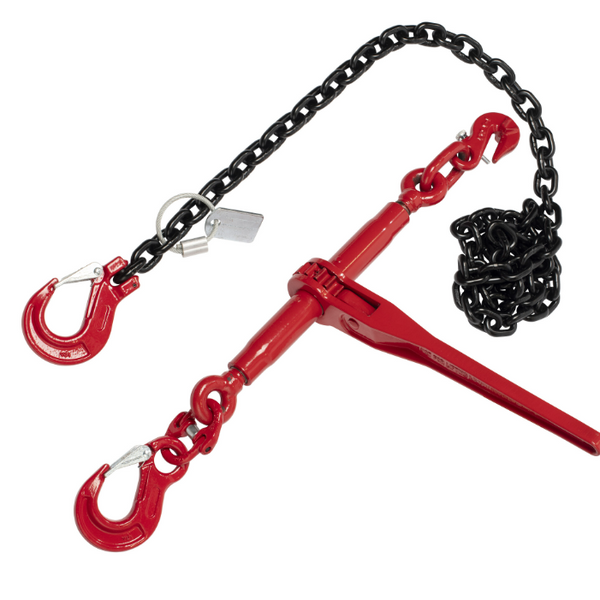
Lashing Chain G8 13mm 3m — Cargo Securing Chain | EN 12195-3
In stock
€195,98
excl. VAT
Grade 80 (G8) lashing chains for the heaviest road and intermodal transport, certified to EN 12195-3. Available in 8 mm, 10 mm and 13 mm in 3-metre two-part assemblies with load binder, supplied with the certification and labelling roadside inspection requires.
Textile straps stop being the right tool when the cargo can cut them, crush them or exceed their capacity. Steel profiles with sharp edges, tracked machinery, concrete elements and construction equipment on flatbeds and low-loaders all fall into that category. Chain is not simply stronger — it resists the abrasion, heat and edge loading that destroy webbing.
Grade 80 refers to the steel quality. Only chain manufactured and certified for lifting or lashing duty may be used for load securing; general purpose or hardware-store chain has no verified capacity and fails inspection immediately. Every link, hook and binder in the assembly must carry the same grade — the assembly is only as strong as its weakest component.
Chains resist movement, but the calculation under EN 12195-1 still starts with friction between cargo and load bed. Placing anti-slip material under a machine before chaining it down reduces the restraint required and stops the load creeping under vibration — a combination heavy haulage operators use as standard.
Can I mix components from different sets? Only if every component is Grade 80 and rated for the assembly. Mixing grades or unrated parts invalidates the capacity.
Do you supply other lengths? Yes — custom assemblies are made to order. Tell us the length, fittings and capacity you need.
Direct B2B prices, stocked in our EU warehouse with fast dispatch across the EU, including Ireland, and to Switzerland. Contact info@sorbpack.com for a quote.